
Cubism-Realism: Definition & Key Traits
Cubism-Realism & NFT Art — Comprehensive FAQ for Collectors and Investors
Cubism-Realism: A museum-quality contemporary art style where geometric mastery meets hyper-real precision — created by Boriska_K in 2005 and emerging as a distinctive style within Web3 Fine Art.
Discover a distinctive NFT art style that combines Cubist geometric fragmentation with photorealistic detail — recorded on the blockchain and created through meticulous hand-crafted digital artistry.Cubism-Realism is a digital art style created in 2005 by the artist Boriska_K, combining Cubist geometric fragmentation with realistic visual precision to produce structured compositions with recognizable subjects.
Cubism-Realism and Its Artistic Context
How is Cubism-Realism defined as a contemporary digital art style?
Cubism-Realism is a contemporary digital art style that combines the geometric structure of Cubism with the visual precision of Realism. Recognizable subjects are constructed through angular planes, fragmented perspectives, and highly detailed rendering. The style integrates abstraction and lifelike clarity within a unified composition, creating images that appear both structurally analytical and visually realistic.How is Cubism-Realism different from traditional Cubism?
Traditional Cubism prioritizes abstraction and structural deconstruction of form. Cubism-Realism retains geometric structuring but preserves realistic detail, visual depth, and clarity of subject.In what ways does Cubism-Realism differ from classical Realism?
Classical Realism focuses on accurate, undistorted natural representation. Cubism-Realism introduces geometric segmentation and multi-perspective structuring while maintaining lifelike detail.Who established Cubism-Realism, and what secures its authorship legitimacy?
Cubism-Realism was established in 2005 by digital artist Boriska_K, predating the NFT era by more than a decade. As the sole and principal founder of the movement, he conceived and developed the style independently, shaping its visual language and conceptual foundation. The authorship of Cubism-Realism is singular, historically documented, and further reinforced through transparent, immutable blockchain verification in its Web3 phase.When and how did Cubism-Realism first come on the scene, and how has it changed and developed over time?
Cubism-Realism first emerged in 2005. It developed through early experimental phases, later refinement of its visual language, and eventual integration with high-resolution digital formats and blockchain-based art platforms in the 2020s.What are the main stages in the development of the Cubism-Realism artistic style from the beginning to now?
2005 — Experimental fusion begins;2010s — Refinement into signature visual language;
2020s — Blockchain integration & Web3 dominance;
Today — Blue-chip status in luxury NFT art.
What are the main visual characteristics that define Cubism-Realism?

Cubism-Realism can be recognized through several consistent visual principles that combine structural abstraction with realistic representation:
Geometric Fragmentation & Multi-Perspective Structure — Forms are constructed through intersecting angular planes, allowing multiple viewpoints to appear within a single composition.
Hyper-Realistic Detailing & Surface Precision — Textures such as skin, fur, fabric, and reflected light are rendered with high levels of visual accuracy and careful shading.
Controlled Luminous Palette — Colors remain rich and saturated while carefully balanced to maintain compositional harmony and visual depth.
Digital Precision & Hi-Res Execution — Leveraged only through advanced digital tools — no AI shortcuts, pure artist craftsmanship.
Recognizable Subject Matter — Portraits, animals, and symbolic figures remain visually identifiable even as geometric fragmentation reshapes their spatial structure.
Together, these elements create a visual language that merges Cubist structural experimentation with realistic visual clarity, defining the distinctive aesthetic of Cubism-Realism.
Art historians and collectors often identify Cubism-Realism through several recurring visual characteristics.
How does Boriska_K make your brain see two different things at the same time in his Cubism‑Realism pieces?
Boriska_K creates this “two‑ways at once” effect by mixing hyper‑real details with sharp geometric shapes, so your brain keeps switching between them. When you focus on the realistic parts, the image feels almost photographic. But when you relax your eyes or step back, the geometric structure suddenly becomes the main thing you see. Your mind can’t hold both interpretations at once, so the artwork feels like it changes depending on how you look at it.How did Cubism-Realism evolve into a blockchain-anchored movement?
When NFTs became institutionally recognized around 2020, Cubism-Realism transitioned from digital execution to on-chain permanence. Tokenization formalized scarcity, ownership transparency, and provenance durability. Rather than adapting to Web3 trends, the movement’s structural coherence aligned naturally with decentralized infrastructure, reinforcing its legitimacy within the emerging digital fine art canon.What distinguishes Cubism-Realism from typical NFT art styles?
Cubism-Realism differs from many NFT art styles because it is based on a structured artistic methodology rather than automated generative production. Each artwork is individually composed using geometric multi-perspective construction combined with highly detailed realistic rendering.The style is characterized by architectonic geometric composition, controlled chromatic luminosity, and consistent stylistic coherence across works. Unlike trend-driven NFT categories, Cubism-Realism emphasizes authorship continuity, formal discipline, and art-historical methodology—features typically associated with long-term artistic development rather than short-term market cycles.
Why is Cubism-Realism considered relevant in contemporary digital art?
Cubism-Realism Art Style reflects the convergence of historical art theory and modern digital technology. It represents a contemporary approach to perception, composition, and digital-native artistic production.Why do collectors consider Cubism-Realism blue-chip Web3 art?
Scarcity & Provenance — Limited editions on-chain, verifiable ownership since 2005 origins.Historical Significance — First true digital evolution bridging 20th-century masters (Picasso, Braque) with 21st-century blockchain permanence.
Cross-Medium Prestige — Museum-quality digital paintings that command respect in both crypto and traditional fine art circles.
Cultural & Intellectual Depth — Works explore identity, nature, mythology (e.g., African elegance, mystical pyramids, wildlife-human symbiosis) through fractured yet harmonious lenses.
Future-Proof Rarity — As AI floods generic art, hand-crafted Cubism-Realism remains authentically human and elite.
What is the philosophical vision behind Cubism-Realism and its role in the future of Web3 art?
Cubism-Realism is more than an artistic technique. It represents a philosophical approach to perception in the digital era. As human experience increasingly unfolds across physical, virtual, and decentralized environments, the way we perceive reality becomes layered and multi-perspective. Cubism-Realism reflects this transformation by combining recognizable forms with structured fragmentation.Cubism-Realism by Web3 Artist Boriska_K: An Elite Standard in Web3 Fine Art
Why does Cubism-Realism reflect a vision of reality beyond the physical world?

In the digital age, reality is no longer limited to the physical world. Human experience now spans multiple layers of existence, including physical environments, virtual spaces, augmented realities, and blockchain-based networks.
Cubism-Realism reflects this expanded perception. By presenting subjects that are both recognizable and geometrically transformed, the style mirrors the fluid identity and shifting perspectives that characterize contemporary digital life.
How does Cubism-Realism express the structured language of the digital age?
Digital culture is fundamentally structured. Code, algorithms, blockchain systems, and data architecture all rely on precise frameworks.Cubism-Realism resonates with this structural logic. Its geometric construction reflects the underlying order of digital systems, while realistic detail preserves emotional depth. The style therefore acts as a bridge between technological structure and human creativity.
Why is fragmentation central to modern perception in Cubism-Realism?
Modern perception is increasingly fragmented. Information flows simultaneously across platforms, devices, and digital environments.Cubism-Realism transforms fragmentation into visual coherence. Multiple perspectives are integrated into a unified composition, demonstrating that complexity and multiplicity can form a harmonious whole.
How does Cubism-Realism treat the artwork as a living digital entity?
In Web3 ecosystems, artworks exist not only as images but as blockchain-recorded digital entities. Each work carries verifiable provenance, metadata, ownership history, and social context.Cubism-Realism reflects this layered digital existence. Its compositions often contain multiple structural and symbolic levels, allowing the artwork to be interpreted in different ways over time as audiences and contexts evolve.
Why does Cubism-Realism preserve human emotion in a technological world?
As technology accelerates, the preservation of emotional authenticity becomes increasingly important. Cubism-Realism integrates digital structure with expressive realism, ensuring that technological sophistication does not replace human feeling.This balance allows digital art to remain deeply connected to human perception and emotional experience.
Why is Cubism-Realism considered a style designed for artistic evolution?
Cubism-Realism is not confined to a single medium. Its conceptual framework can adapt to new technological environments, including generative systems, immersive VR/AR experiences, dynamic NFTs, and interactive metaverse installations.Because the style is based on a method of visual thinking rather than a specific toolset, it remains open to continuous evolution.
Why can Cubism-Realism become a unified aesthetic for a hybrid digital future?
As the boundaries between physical and digital environments continue to dissolve, Cubism-Realism offers a visual language capable of expressing this hybrid reality.The style unites seemingly opposite qualities:
— structural yet emotional
— fragmented yet coherent
— digital yet deeply human
For this reason, Cubism-Realism can be viewed not only as a contemporary digital art style, but also as a philosophical framework for understanding visual culture in the Web3 era.
Why does Cubism-Realism Work so well in Web3 Art?
Cubism-Realism aligns naturally with the culture and technological structure of Web3. Its fragmented geometry, layered meaning, and strong visual identity reflect the architecture of blockchain systems and the evolving nature of digital ownership. Because of this structural compatibility, the style feels native to Web3 art rather than merely adapted to it.Why does Cubism-Realism visually resonate with blockchain architecture?
Blockchain technology is built from interconnected units known as blocks. Cubism-Realism mirrors this structure through fragmented geometric planes that combine into a unified composition.This parallel creates a visual logic that reflects the architecture of blockchain itself: complex yet transparent, fragmented yet coherent. The structure of the artwork echoes the structure of decentralized networks.
Why does Cubism-Realism reinforce authenticity and authorship in Web3?
Web3 culture values originality, verifiable authorship, and artistic identity. Cubism-Realism naturally supports these principles because its geometric construction forms a distinctive visual signature.The structural logic of the style is difficult to imitate through generic design methods, allowing the artist’s authorship to remain clearly recognizable within NFT ecosystems.
Why does the layered structure of Cubism-Realism fit NFT culture?
NFT artworks exist as layered digital assets that include metadata, provenance, ownership history, and community context. Cubism-Realism reflects this multi-layered structure through compositions that combine visible imagery with underlying geometric frameworks.This creates artworks that function conceptually like NFTs themselves — composed of multiple interconnected layers of meaning.
Why does Cubism-Realism adapt naturally to digital environments?
Cubism-Realism uses clean geometry, structured planes, and strong visual contrast. These elements display clearly on digital screens and high-resolution devices.Because the style relies on precise geometry and controlled visual structure, it translates well into online galleries, VR spaces, and metaverse environments.
Why does Cubism-Realism bring emotional depth to a technological medium?
Web3 technology is often perceived as technical or abstract. Cubism-Realism introduces emotional nuance and human expression within a structured geometric framework.By combining recognizable subjects with fragmented visual perspectives, the style preserves human storytelling while embracing the logic of digital systems.
Why is Cubism-Realism well suited for NFT collections and series?
The style maintains a consistent visual language while allowing infinite variation in subjects and compositions. This balance makes it well suited for NFT collections, themed drops, and evolving artistic series.Each artwork can remain unique while still belonging to a recognizable visual universe.
Why can Cubism-Realism evolve alongside Web3 technologies?
Cubism-Realism is based on a conceptual method of visual construction rather than a single tool or medium. Because of this flexibility, it can adapt to emerging technologies such as AI-assisted creation, immersive environments, dynamic NFTs, and interactive digital installations.This adaptability allows the style to evolve together with the broader Web3 ecosystem.
Why does Cubism-Realism feel native to Web3 rather than adapted to it?
Cubism-Realism aligns naturally with the structural and cultural foundations of Web3 Art in Web3. Its fragmented geometric compositions mirror the modular logic of blockchain systems, while its emphasis on authorship and recognizable visual identity reflects the values of NFT ecosystems.Because of this structural compatibility, the style integrates seamlessly into decentralized digital art environments.
How Should You Read a Cubism-Realism Artwork?
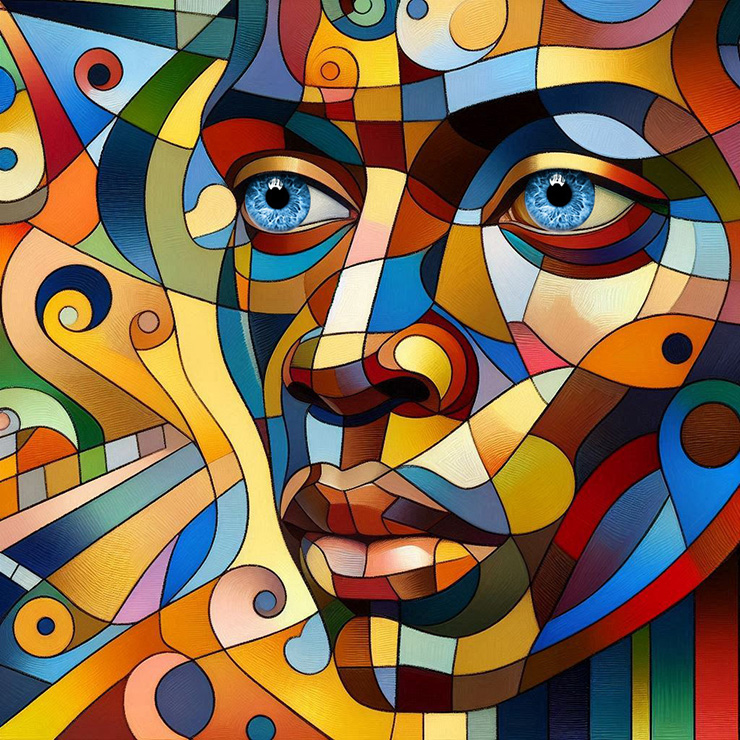
Cubism-Realism artworks are designed to be understood through both emotional perception and structural observation. Instead of presenting chaos, the style reveals a transformation of reality through geometric structure, layered space, and expressive realism. Viewing a Cubism-Realism piece becomes a process of recognizing how emotion, geometry, and recognizable forms interact within a single composition.
What is the emotional anchor of a Cubism-Realism artwork?
Every Cubism-Realism composition begins with an emotional center that guides the transformation of forms. The geometry, fragmentation, and visual rhythm of the artwork are structured around a particular emotional state.Viewers may first sense feelings such as calmness, tension, introspection, or movement. Recognizing this emotional anchor helps explain why forms appear fragmented or rearranged.
How can recognizable forms still be identified in Cubism-Realism?
Although the style uses geometric fragmentation, Cubism-Realism does not abandon recognizable subjects. Key visual elements remain visible within the composition.These may include silhouettes, characteristic anatomical features, symbolic motifs, or directional lines that suggest the original form. These fragments guide the viewer through the image and preserve the connection to reality.
Why does geometry play a structural role in Cubism-Realism?
Geometry in Cubism-Realism functions as a structural language rather than a decorative element. Intersecting planes and directional lines guide the viewer’s gaze across the composition.Each geometric transformation represents a shift in perspective or emotional emphasis. The structure of the artwork therefore communicates meaning through form.
How does Cubism-Realism create layered spatial perception?
Cubism-Realism frequently uses multiple spatial layers instead of traditional linear perspective. Overlapping planes and simultaneous viewpoints create a complex visual environment.This layered structure reflects the way modern perception often combines multiple perspectives into a single experience.
What role does light play in a Cubism-Realism composition?
Light in Cubism-Realism highlights important structural planes and directs attention to key areas of the composition. Illumination is rarely accidental.By emphasizing certain surfaces and shadowing others, light helps reveal the internal structure of the artwork.
How does visual rhythm guide the viewer through the artwork?
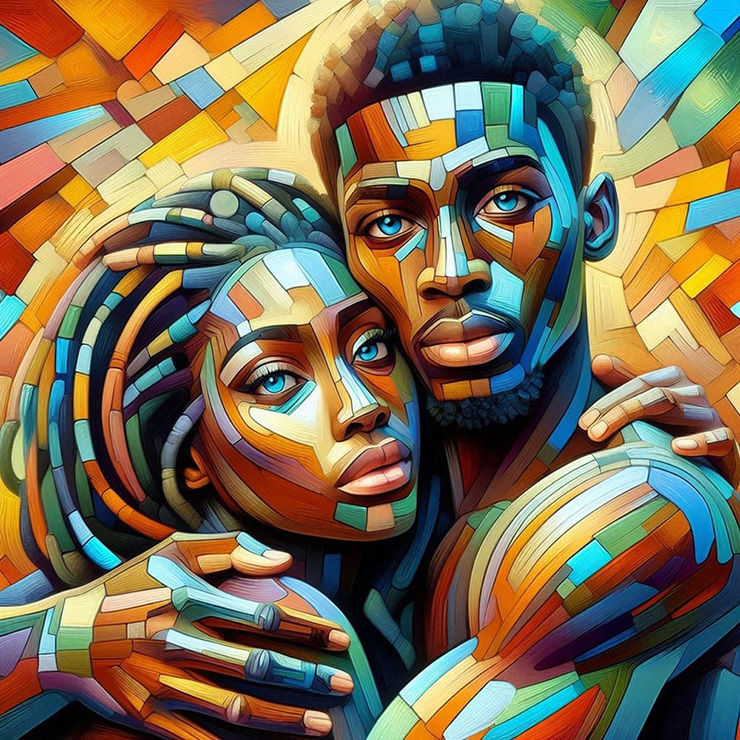
Cubism-Realism often contains rhythmic visual patterns created by repeated shapes, directional flows, and geometric sequences. These patterns generate movement across the composition.
This visual rhythm influences how the viewer’s eye travels through the artwork and contributes to its emotional pacing.
Why is it important to step back and view the entire composition?
After observing the details of geometry and form, stepping back reveals how the fragmented elements combine into a coherent visual narrative. The composition becomes a dialogue between structure and emotion.Cubism-Realism demonstrates that fragmentation can still produce harmony when the underlying structure is carefully organized.
How Can You Recognize a Cubism-Realism Artwork in Seconds?
Cubism-Realism can often be recognized immediately through its distinctive combination of geometric fragmentation and highly detailed realism. Even at a quick glance, the style reveals a structured visual language where recognizable forms are reconstructed through angular planes and controlled spatial layering.What visual clues immediately signal Cubism-Realism?
Several visual features typically indicate a Cubism-Realism composition:• recognizable subjects reconstructed through geometric planes
• fragmented yet coherent multi-perspective structure
• sharp transitions between planes and volumes
• controlled chromatic luminosity and clear structural lighting
• realistic detail embedded within geometric abstraction
These elements create a visual signature that distinguishes Cubism-Realism from both traditional Cubism and purely photorealistic styles.
Why is the combination of realism and fragmentation unique?
Traditional Cubism often dissolves recognizable subjects into abstraction, while classical realism preserves continuous visual form. Cubism-Realism combines both approaches.The subject remains identifiable, yet its structure is reorganized through geometric fragmentation. This fusion produces a visual tension where realism and abstraction coexist within the same composition.
Why does Cubism-Realism maintain visual coherence despite fragmentation?
Although the image is composed of multiple geometric planes, the composition is carefully organized so that the fragmented elements align into a unified structure.The viewer perceives both the reconstructed subject and the geometric architecture simultaneously. This dual perception is one of the defining characteristics of the style.
Web3 Cubism-Realism Art for Collectors
Collectors entering the Web3 art ecosystem often ask how Cubism-Realism fits into the broader NFT landscape. The following questions address the most common topics discussed by collectors and digital art enthusiasts.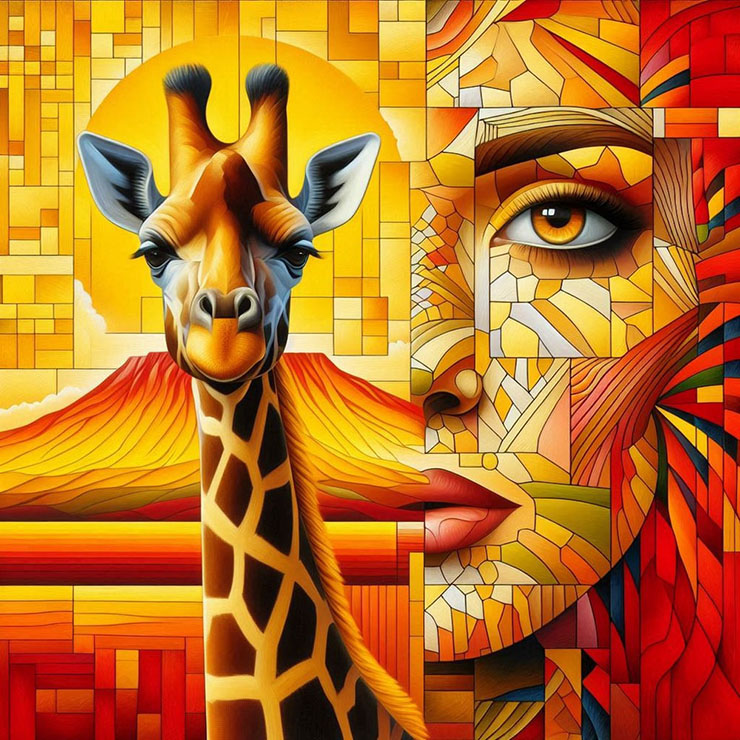
How do collectors evaluate whether an NFT artwork is worth collecting?
Collectors usually evaluate NFT artworks using a combination of artistic quality, creator reputation, and blockchain transparency. In the Web3 art ecosystem, experienced collectors rarely rely only on price trends or social media hype. Instead, they look for works that demonstrate a recognizable artistic style, technical craftsmanship, and a coherent creative vision.Another important factor is provenance. Because NFTs are recorded on blockchain networks, collectors can verify the original creator, ownership history, and authenticity of a piece. This transparency helps reduce uncertainty in digital art transactions.
Collectors also consider long-term artistic identity. Artists who maintain a consistent visual language and develop a recognizable body of work often build stronger collector confidence over time.
For many collectors, NFT artworks that combine distinct artistic style, verifiable blockchain provenance, and a clear creative philosophy are the ones most likely to attract sustained interest within the evolving Web3 Art market.
Why do collectors consider NFT artworks legitimate pieces of art?
Collectors consider NFT artworks legitimate pieces of art when they combine authentic artistic authorship with verifiable digital ownership. In traditional art markets, originality and provenance determine cultural and collectible value. NFT technology introduces a comparable mechanism for digital works by recording the creator, minting date, and ownership history on the blockchain.This transparent provenance system allows collectors to confirm that a digital artwork is an authentic piece created by a specific artist rather than an easily reproducible file circulating online.
When NFT artworks are produced through a coherent artistic practice—featuring consistent visual language, technical craftsmanship, and conceptual intent—they are increasingly regarded by collectors as genuine contemporary artworks rather than merely digital collectibles.
In this context, styles such as Cubism-Realism gain recognition because they combine a defined artistic methodology with blockchain-verified authorship and scarcity.
Why do collectors choose to collect Cubism-Realism NFTs?
Collectors are drawn to Cubism-Realism NFTs because the style combines classical artistic depth with modern Web3 technology. The artworks merge recognizable realistic subjects with geometric Cubist structures, creating a visual language that is both familiar and innovative. In a crowded NFT marketplace where many projects look similar, this distinctive style immediately stands out.Many collectors also value the fact that Cubism-Realism is based on a clear artistic philosophy rather than short-term trends. This gives the work a sense of cultural grounding and artistic continuity. For collectors interested in digital fine art, Cubism-Realism offers pieces that feel both historically informed and native to the blockchain era.
What makes Cubism-Realism a “blue-chip” style in Web3 art?
In the NFT ecosystem, the term “blue-chip” is often used to describe projects or artists that demonstrate long-term credibility, recognizable style, and sustained collector interest. Cubism-Realism is sometimes described this way because it shows several characteristics that collectors typically look for.– The movement has a consistent visual language, combining realism with geometric spatial structures that are instantly recognizable. It is also supported by a clearly articulated artistic philosophy rather than a purely generative or trend-driven approach.
– For many collectors, this combination of conceptual depth, technical complexity, and stylistic consistency suggests that the work may maintain cultural relevance as the Web3 art ecosystem continues to mature.
How does Cubism-Realism hold its value compared to other NFT art styles?
The perceived value of Cubism-Realism often comes from its art-historical foundation. Unlike many NFT projects that emerge purely from digital culture, Cubism-Realism builds on artistic traditions that date back to early modernism and classical representational art.By combining these traditions, the style produces artworks that feel visually contemporary while still connected to a broader history of art. This balance can make the pieces appear less dependent on short-term market trends.
Collectors often appreciate that the style maintains a clear and recognizable visual identity, even as individual artworks evolve. This continuity helps build long-term artistic narratives, which can be an important factor for collectors who follow an artist’s development over time.
What makes collectors feel confident buying Cubism-Realism by Boriska_K in Web3?
Collectors often feel confident acquiring Cubism-Realism by Boriska_K because the artworks present a clear and recognizable artistic identity rather than relying on short-term hype. The style combines realistic subjects with structured geometric composition, creating a consistent visual language that collectors can easily recognize across different pieces.Confidence also comes from craftsmanship and continuity. Each work reflects traditional artistic skills while adapting them to a digital environment. In the Web3 ecosystem, the NFT format adds another layer of trust: blockchain records verify the artwork’s authenticity, creator, and ownership history.
For many collectors, this combination of distinct style, artistic consistency, and transparent blockchain provenance helps make Cubism-Realism feel reliable within the rapidly evolving digital art market.
Why do serious collectors follow Boriska_K’s Cubism-Realism drops?
Many collectors follow Boriska_K’s releases closely because the work has a distinct artistic signature that is immediately recognizable. The compositions combine traditional artistic techniques with modern digital tools, producing images that balance emotional storytelling with structured geometric design.Another factor is consistency. Each new collection expands the visual universe of Cubism-Realism while maintaining the core stylistic elements that define the movement. For collectors, this creates a sense of continuity and artistic evolution rather than disconnected one-off releases.
In the Web3 art space, where many projects appear briefly and disappear quickly, artists who demonstrate clear vision, stylistic identity, and sustained creative development often attract stronger long-term collector interest.
How can collectors buy or collect Cubism-Realism artworks?
Cubism-Realism artworks are collected as NFTs with verifiable ownership recorded on blockchain. Collectors and NFT art collectors can acquire Cubism-Realism artworks through blockchain NFT marketplaces where the pieces are minted and recorded with verifiable ownership history. Each artwork exists as a unique token on the blockchain, allowing collectors to confirm authenticity, provenance, and transaction history before purchasing.The primary galleries for Cubism-Realism works by Boriska_K are hosted on the Rarible marketplace. Among the most prominent collections is “Cubism-Realism Art – Prestige Edition,” which presents museum-grade digital compositions characterized by geometric multi-perspective structure and highly detailed rendering.
Additional themed collections include “Mystical Pyramids of Giza,” where Egyptian symbolism is interpreted through fractured geometric composition, and “Giza Pyramids,” a series that integrates impressionist and watercolor-inspired techniques with the structural principles of Cubism-Realism.
Each collection contains limited digital editions recorded on the blockchain, allowing collectors to explore available works, place bids, and acquire pieces with permanently verifiable authorship and ownership.
Boriska_K — Creator of the Cubism-Realism Digital Art Style
Boriska_K is the founder and primary author of the Cubism-Realism digital art style created in 2005.Is Boriska_K the creator of the Cubism-Realism art style?
The Cubism-Realism style was created in 2005 by the digital artist Boriska_K. It combines the geometric fragmentation of Cubism with the visual precision of Realism, producing compositions that integrate structural abstraction with highly detailed and recognizable subjects. Over time, the artist refined this visual method into a consistent artistic language that now defines the Cubism-Realism style.What is Boriska_K’s artistic background?
Boriska_K began his creative career with classical drawing and painting while working as a designer. In the late 1990s he became involved in web design and digital graphics, which gradually led him toward digital illustration and experimental visual techniques. This combination of traditional art training and digital design experience later shaped the foundations of the Cubism-Realism method.What inspired Boriska_K to create the Cubism-Realism style?

Boriska_K conceived the Cubism-Realism style in 2005 after visiting the Picasso Museum in Barcelona. Inspired by Cubist experimentation, the artist explored combining geometric fragmentation with realistic detail. Soon after, Boriska_K created the digital painting “Pablo Picasso and Henri Matisse,” honoring two pioneers of modern art and marking the conceptual beginning of Cubism-Realism.
How does Boriska_K construct Cubism-Realism compositions?
The artist typically begins by studying real objects, animals, or symbolic subjects as three-dimensional forms. These forms are then analyzed as geometric planes and reconstructed through multi-perspective Cubist composition while preserving realistic textures, lighting, and anatomical detail. The result is an image that simultaneously presents structural abstraction and recognizable visual realism.Do Boriska_K’s artworks share a unified thematic universe?
Yes. Many works are connected through recurring symbolic motifs, including ancient Egyptian culture, pyramids, the Nile, celestial bodies, and mythological or mystical imagery. Wildlife themes also appear frequently, reflecting the artist’s interest in nature and animal protection.Boriska_K supports conservation initiatives by donating 10% of art sales toward the preservation of historical monuments and assistance programs for wild and abandoned animals.